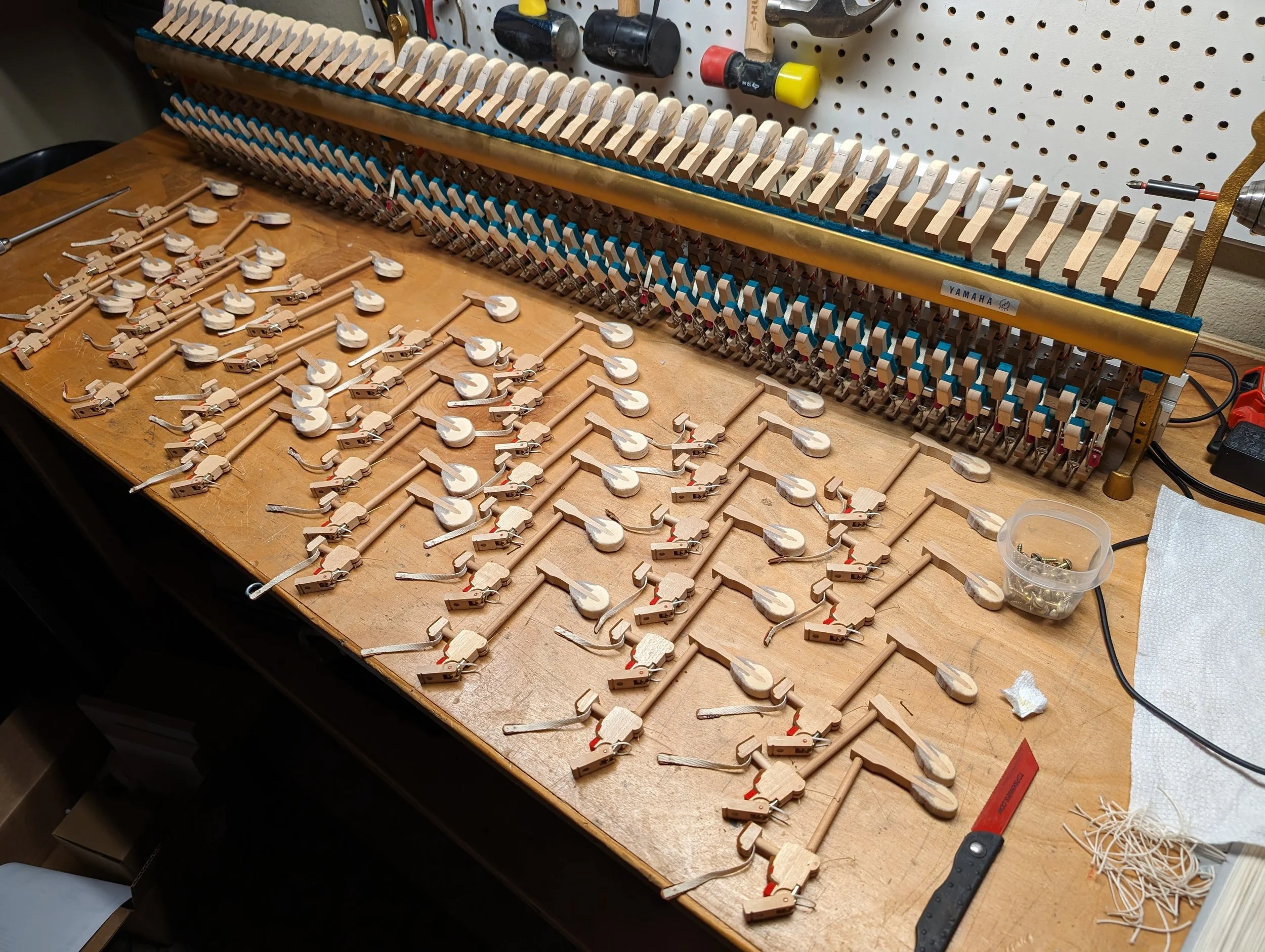

Pianos are complex instruments that require precise adjustment to perform and sound well. With 10 to 20 tons of string tension, thousands of parts, and centuries of continual refinement, your technician must be well trained in their skill-set and well rounded in their approach.
Humidity Control
Pianos are extremely susceptible to changes in humidity. Fluctuations can cause detrimental changes to the tuning and mechanical action. This accounts for the vast majority of problems encountered by piano owners, presenting as stuck/sluggish keys, sudden changes in tuning, and tight/stuck cabinet parts. Over time, humidity fluctuations can and will destroy the structural integrity of the soundboard, bridges, pin-block, and more, ruining the piano.
Dampp-Chaser Dehumidifier Systems are made specifically for pianos, and are vitally imiportant in the gulf coast region. I can install one in almost any piano, and the difference in stability over time is night and day. I cannot recommend them enough.

Routine Tuning
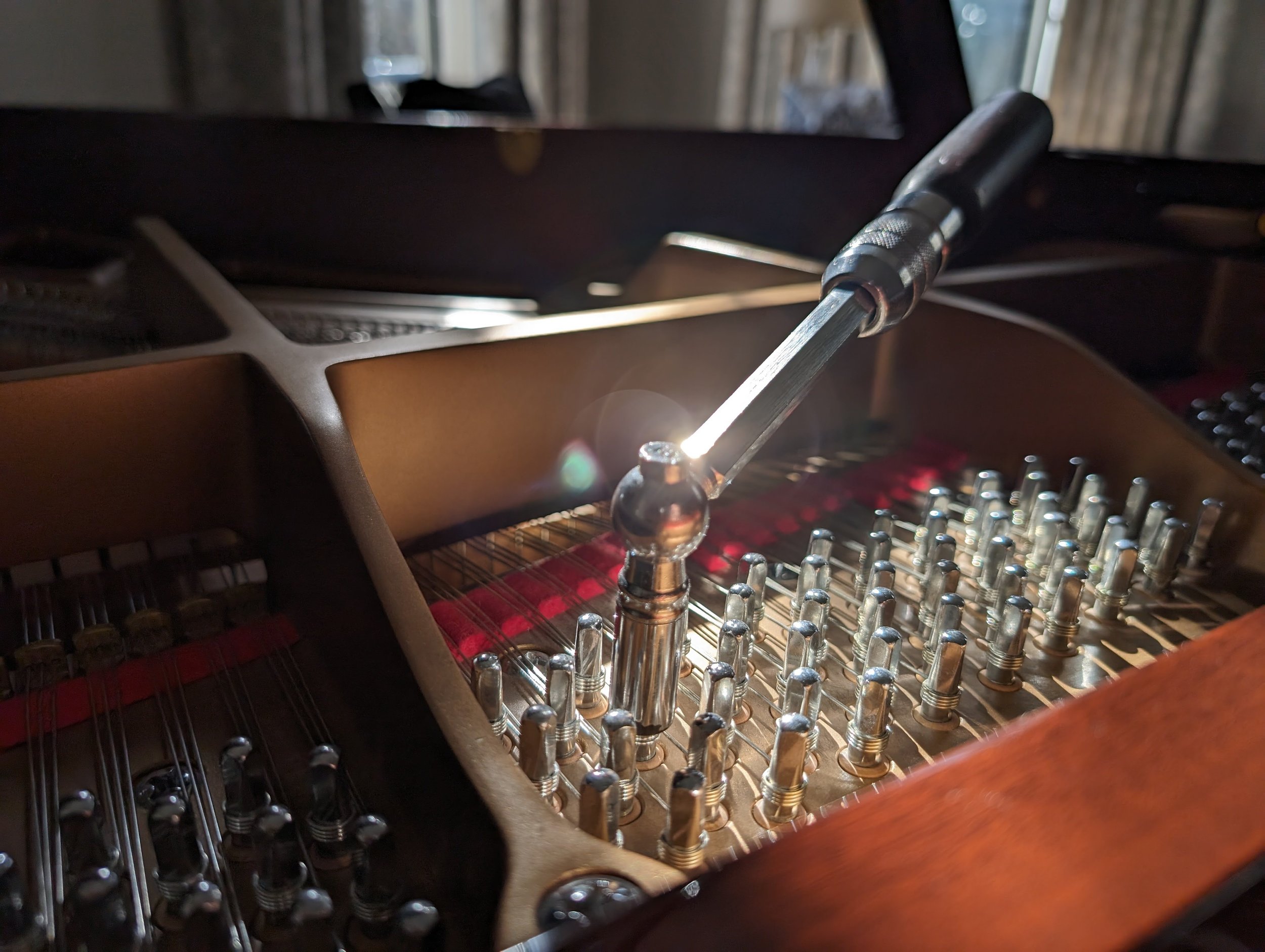
Semi-annual tuning is usually reccommended to maintain your instrument in perfect tune as the seasons pass. At a minimum, it should be tuned once per year to prevent the pitch from drifting too far from international pitch (A=440hz) regardless of how often it is played.
Piano tuning is a deceptively involved process that takes years to learn, and longer to master. Full knowledge of all other aspects of the piano is required to produce a clean, stable tuning. There are no tricks or shortcuts; there are only ways and means to improve your instrument to turn a "good" tuning into a great one.
When routinely tuned, I can focus on other improvements to your piano instead of having to overhaul the tuning during infrequent visits.
Hammer Voicing and Tone Adjustment
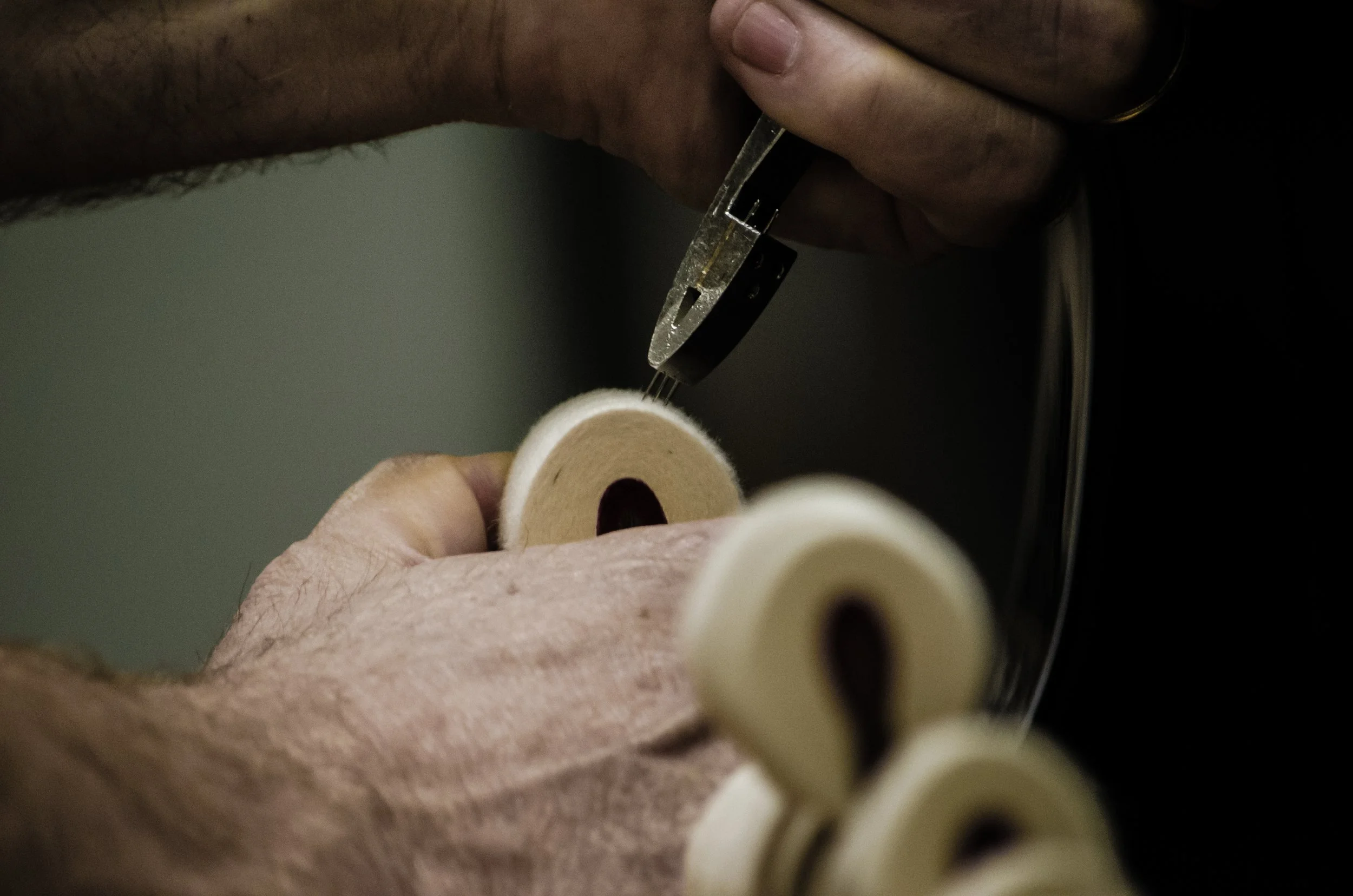
Felt hammers strike the strings and thus have the greatest impact on the tonal quality of your piano. Felt that is too hard produces an unpleasantly harsh "bright" tone. Felt that is too soft sounds muffled and "dark". Hammer voicing can bring balance and beauty to your piano's tone that you may not have thought was possible.
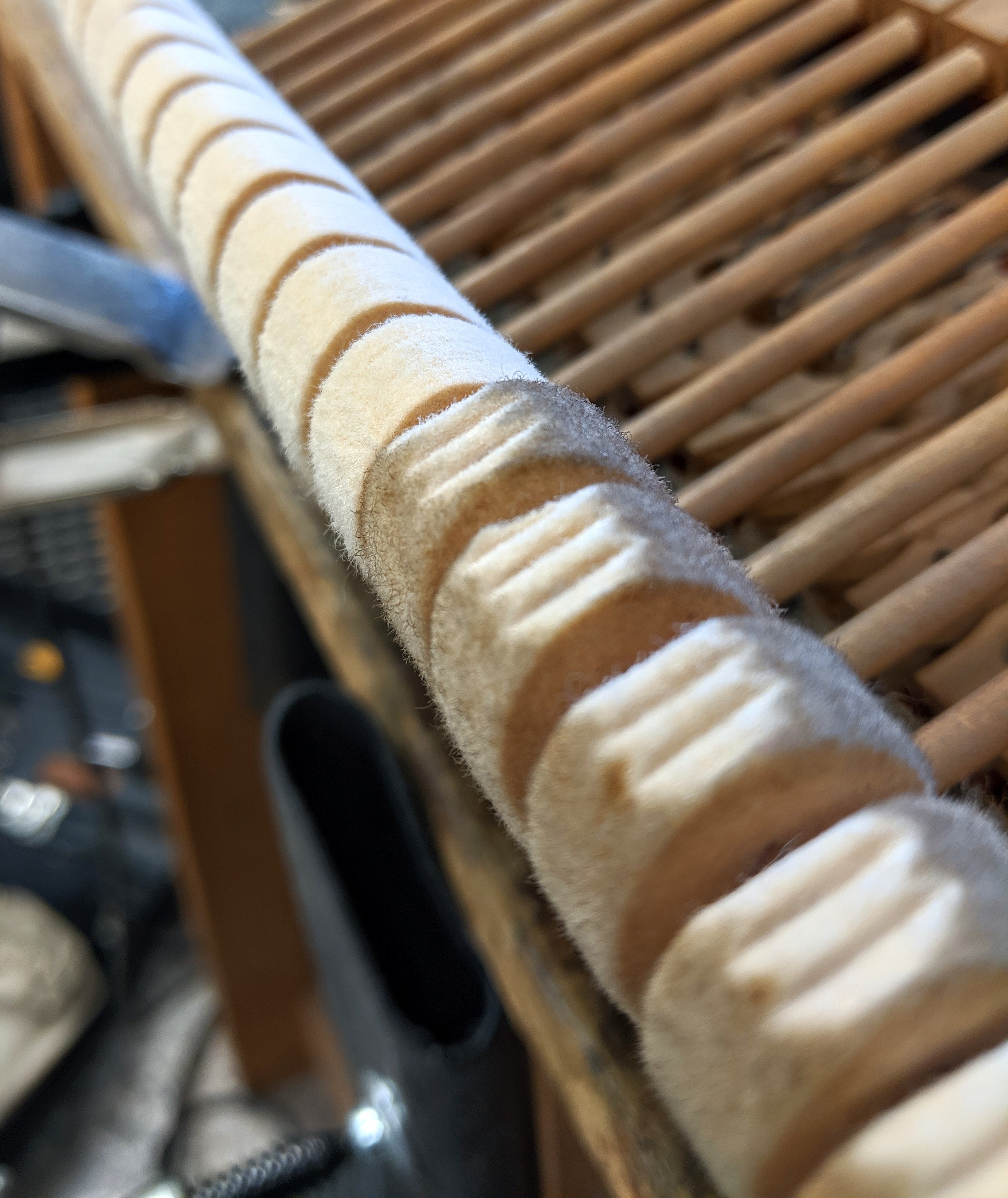
Over time the hammers get compacted by the strings, flattening out the hammer surface. This can cause poor and harsh tone and even cause damage to pinnings. Filing or ‘re-shaping’ the hammers is part of routine action maintenance, and keeps your hammers easy to voice and sounding great. Conversely some pianos may sound too muffled or lifeless, and hardening can transform it into a much more vibrant experience. Eventually when worn-out, the hammers can be replaced entirely.
Every piano is different, and I can help guide your expectations.
Action Maintenance
The piano’s mechanical action contains thousands of individual parts. These parts have to work together under extremely precise measurements down to thousandths of an inch. An out of regulation piano results in poor repetition, an inability to play quietly, sluggish keys, a heavy feel, and a host of other frustrating issues. Regulating the action will transform your piano, making it a joy to play once again. This is a process that should typically be performed once every 5 to 10 years to ensure the longevity of your instrument.
The most common reaction to this work is “Wow” and a sense of disbelief that it’s the same piano. Some TLC goes a very long way, and you deserve something that plays well.
Repairs and Replacements
Hundreds of pinnings, felts, leathers, glue joints, and many other parts all eventually wear out, and sometimes things just fail. Noise, sticking keys, broken parts, and many other problems are (usually) easily solved but can be indicators of broader issues that require attention.
Common problems include excess friction between parts, action regulation issues, worn out felt, and most often an uncontrolled humidity environment. However, sometimes parts replacements are inevitable. Fixing the immediate symptom and having a plan for the root cause is the path to success.
There are dozens of routine repairs and replacements that can happen over the life of a piano, and it is the technicians job to keep you informed and your piano at its best.